
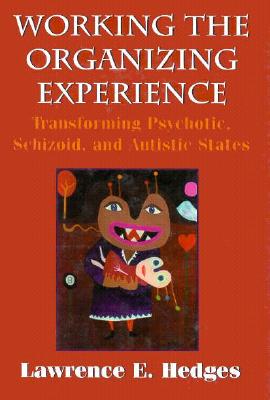
Working the Organizing Experience: Transforming Psychotic, Schizoid, and Autistic States
| AUTHOR | Hedges, Lawrence E.; Grotstein, James S. |
| PUBLISHER | Jason Aronson (10/01/1994) |
| PRODUCT TYPE | Hardcover (Hardcover) |
Description
Hedges introduces the term the organizing experience to chart the course of early trauma to its impact on adult living and the transference situation. He describes the infant's primary life task as organizing channels to the human nurturing environment - first physiological connections to the mother's body and later psychological connections to the mother and others. During the organizing experience, inevitable traumas leave memory traces that affect subsequent interpersonal relationships. Even if the infant has the good fortune to be born healthy and into an optimal family environment, he or she must endure intense moments of needing and desiring that are not or cannot be responded to in the exact ways or in the precise time frames the infant needs to maintain a sense of internal harmony and continuity. What then becomes conditioned during the organizing period is a terror and avoidance of certain kinds of interpersonal connections or situations because the infant initially found them traumatizing.
Show More
Product Format
Product Details
ISBN-13:
9781568212555
ISBN-10:
1568212550
Binding:
Hardback or Cased Book (Sewn)
Content Language:
English
More Product Details
Page Count:
336
Carton Quantity:
15
Product Dimensions:
6.28 x 1.22 x 9.23 inches
Weight:
1.59 pound(s)
Country of Origin:
US
Subject Information
BISAC Categories
Medical | Psychiatry - General
Medical | Developmental - Child
Medical | Psychopathology - General
Dewey Decimal:
616.891
Library of Congress Control Number:
94007821
Descriptions, Reviews, Etc.
jacket back
Hedges introduces the term the organizing experience to chart the course of early trauma to its impact on adult living and the transference situation. He describes the infant's primary life task as organizing channels to the human nurturing environment - first physiological connections to the mother's body and later psychological connections to the mother and others. During the organizing experience, inevitable traumas leave memory traces that affect subsequent interpersonal relationships. Even if the infant has the good fortune to be born healthy and into an optimal family environment, he or she must endure intense moments of needing and desiring that are not or cannot be responded to in the exact ways or in the precise time frames the infant needs to maintain a sense of internal harmony and continuity. What then becomes conditioned during the organizing period is a terror and avoidance of certain kinds of interpersonal connections or situations because the infant initially found them traumatizing.
Show More
Other:
Grotstein, James S.
James S. Grotstein was Professor of Psychiatry, U.C.L.A School of Medicine, and a training and supervising analyst at the Los Angeles Psychoanalytic Institute and at The Psychoanalytic Center of California. He was a member of the editorial board of the "International Journal of Psychoanalysis" and was past North American Vice-President of the International Psychoanalytical Association. He published over 250 papers and was the author or editor/co-editor of numerous books.
Show More
List Price $122.00
Your Price
$120.78