
ISBN 9781508770886 is currently unpriced. Please contact us for pricing.
Available options are listed below:
Available options are listed below:
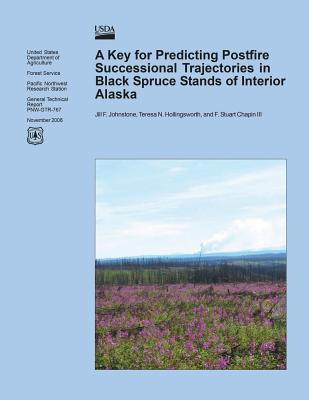
A Key for Predicting Postfire Successional Trajectories in Black Spruce Stands of Interior Alaska
| AUTHOR | United States Department of Agriculture |
| PUBLISHER | Createspace Independent Publishing Platform (06/26/2015) |
| PRODUCT TYPE | Paperback (Paperback) |
Description
Black spruce (Picea mariana (Mill) B.S.P) is the dominant forest cover type in interior Alaska and is prone to frequent, stand-replacing wildfires. Through impacts on tree recruitment, the degree of fire consumption of soil organic layers can act as an important determinant of whether black spruce forests regenerate to a forest composition similar to the prefire forest, or to a new forest composition dominated by deciduous hardwoods. Here we present a simple, rule-based framework for predicting fire-initiated changes in forest cover within Alaska's black spruce forests. Four components are presented: (1) a key to classifying potential site moisture, (2) a summary of conditions that favor black spruce self-replacement, (3) a key to predicting postfire forest recovery in recently burned stands, and (4) an appendix of photos to be used as a visual reference tool. This report should be useful to managers in designing fire management actions and predicting the effects of recent and future fires on postfire forest cover in black spruce forests of interior Alaska.
Show More
Product Format
Product Details
ISBN-13:
9781508770886
ISBN-10:
1508770883
Binding:
Paperback or Softback (Trade Paperback (Us))
Content Language:
English
More Product Details
Page Count:
42
Carton Quantity:
97
Product Dimensions:
8.50 x 0.09 x 11.02 inches
Weight:
0.27 pound(s)
Country of Origin:
US
Subject Information
BISAC Categories
Reference | General
Descriptions, Reviews, Etc.
publisher marketing
Black spruce (Picea mariana (Mill) B.S.P) is the dominant forest cover type in interior Alaska and is prone to frequent, stand-replacing wildfires. Through impacts on tree recruitment, the degree of fire consumption of soil organic layers can act as an important determinant of whether black spruce forests regenerate to a forest composition similar to the prefire forest, or to a new forest composition dominated by deciduous hardwoods. Here we present a simple, rule-based framework for predicting fire-initiated changes in forest cover within Alaska's black spruce forests. Four components are presented: (1) a key to classifying potential site moisture, (2) a summary of conditions that favor black spruce self-replacement, (3) a key to predicting postfire forest recovery in recently burned stands, and (4) an appendix of photos to be used as a visual reference tool. This report should be useful to managers in designing fire management actions and predicting the effects of recent and future fires on postfire forest cover in black spruce forests of interior Alaska.
Show More